September 3, 2010

'Tis the season for...fried green tomatoes!

August 29, 2010

A few summer memories

Peony


Rosa 'Tropicana'

Forgot the name of this one

Hibiscus moscheutos

Part of the garlic harvest

Dahlia 'Chat noir'

Stargazer Lily

Amaryllis

Lilium 'Cancun'

A dew-covered plumbago

Dahlia 'Tommy Keith'

A garden friend

June 6, 2010

Some garden arthropods

Lately we've been finding some interesting creatures of the vertebra-less variety in various parts of the garden:


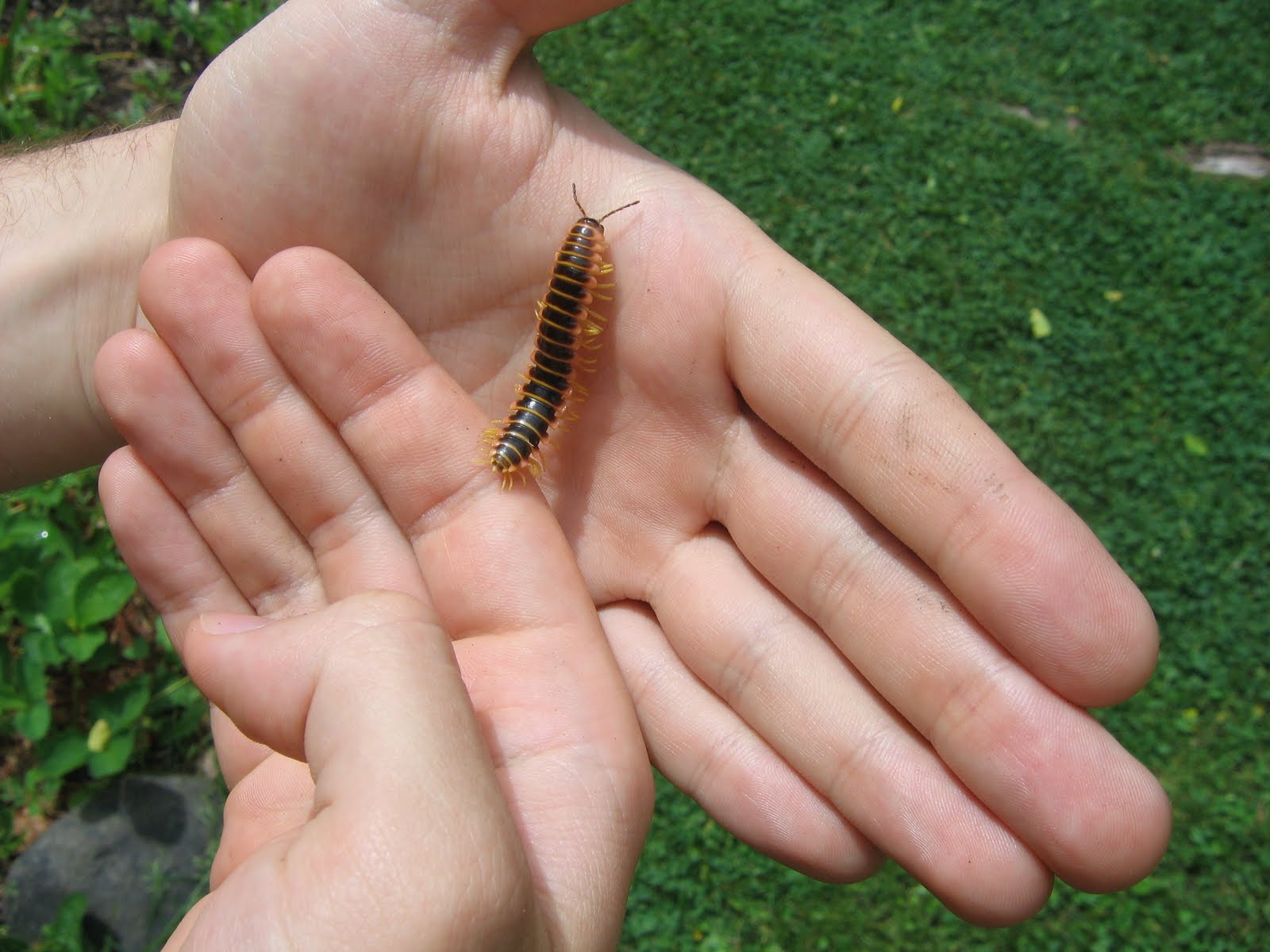
Some type of flat millipede I found walking across the lawn

A rare black purse-weaver (Sphodros niger)

I've had difficulty identifying this very large beetle. My best guesses are that it's some sort of long horn or blister beetle. If you know what it is, let me know!

May 27, 2010

Spruce Pesto: The Results

Finally a follow-up on my plans for the spruce tips: I chucked them in a food processor with some olive oil, parmesan cheese, lemon juice, pepper, and garlic.


And the result:


It's actually quite good, and quite local. Need some pesto in a pinch? There are plenty of Norway spruces in Syracuse. Just remember to collect when the new growth is bright green and tender.

May 4, 2010

Spruce Tips


It's the time of year to collect young, tender spruce tips. Actually, this is the first time I've tried this. You can eat them fresh (they have a somewhat strong lemony, piney taste) or make jelly out of them. Some people also brew spruce-flavored beer. I think I may try to make an experimental pesto sauce out of them.

By the way, the photo above is showing Norway spruce tips I collected from a tree in my backyard. My understanding is that just about any spruce tip is edible, and that white spruce may be the tastiest, but research anything collected outdoors first before eating it.

February 10, 2010

Tonight: Public Forum on Hydrofracking

I don't usually like to get political, that's not what this blog is about, but for this issue I am making an exception.


Central New York is known for its abundant sources of clean water, and this very important life-sustaining resource is in danger in Syracuse. The hydrofracking technique of natural gas extraction may very well be legalized in NYS, and if it is it will likely be implemented in Onondaga County and Cortland County within the Skaneateles Lake watershed. Why is that significant? Well, that is where Syracuse water comes from, unfiltered. If our water supply is polluted by any of the 100+ chemicals used in hydrofracking, it is permanent. Unpolluted water is not only necessary for gardening (in the least), but for human life itself, and it is nightmarish to think about what would happen to Syracuse if its water supply was tainted. I picture something like Love Canal times 100.

Tonight there will be a citizen's community forum on hydrofracking. The forum will take place at 7pm at Nottingham High School (3100 E. Genesee St., Syracuse, NY). Guests include:

Lee Macbeth, Syracuse Watershed Control Coordinator

Ken Lynch, Region 7 DEC Director

Dave Valesky, State Senator

Daniel Young, Regional Representative for Governor Paterson

Mark Dunau, Northeast Organic Farmers Association and Delaware County Farm Bureau

Local landowners who have signed leases

Please attend and let your concerns be heard. If you view Syracuse and Central New York as your home, as I and so many others do, then this is an excellent opportunity to protect your home.

February 8, 2010

Damn deer!

I just glanced out the window and my 'Kuro Delight' camellia has been totally defoliated by deer. I'm so bummed. I definitely did my research before buying these camellias, and they are supposed to be deer resistant. I guess "resistant" is the key word; hungry deer will apparently eat anything when the winter is winding down and food is scarce. They had two fat buds that I was really looking forward to seeing bloom. Sigh.


Anyway, here's something more uplifting: a sign of spring! The following photo was taken in the back garden on January 25 during that little warm spell when spring seemed right around the corner (it certainly doesn't now). Snowdrops never disappoint:

January 17, 2010

January robin


I actually heard a robin yesterday. Not singing, just calling. That might be the earliest I've ever heard one around here (robin not pictured).

January 15, 2010

Garden Blogger's Bloom Day: January 2010


All I can muster this month is a sad-looking kalanchoe. If I
had planned right I might have some miniature roses or something
else, oh well.

A melty day in January

I dread turning into one of those bloggers that disappears for months on end and then reappears with gusto, and then does the same thing all over again in an awful cycle of forget/over-compensate/forget. So I apologize for basically missing most of the fall blogging season (along with many garden blogger's bloom days) and I will certainly try to stay on top of updates, however minor they may be. Fall 2009 was a difficult season as several personal issues prevented me from really putting time and effort into blogging, one of which was a death in the family.


As I write I'm gazing out the back window at what I like to call a "melty" day; the snow is slushy, icicles are dripping, and little patches of dormant garden are peering out here and there. A "warm" day in Syracuse; about 37 degrees. January is an interesting month because it is almost always when a particular hardiness zone sees its winter low temperature, and being a gardener who likes to push the envelope when it comes to hardiness I usually spend January checking temps everyday and thinking about some of the "experiments" I have going on out back. Some of this winter's experiments include:

- an attempt at overwintering (yes, outside) a musa basjoo ("hardy" Japanese fiber banana)
- three Ackerman hybrid camellias, which are supposed to be hardy to a cold zone 6
- a hardy heirloom gladiola called 'Carolina Primrose', also hardy to zone 6
- on the edible front, overwintering some brassicas such as mammoth redrock cabbage, Jersey Wakefield cabbage, and of course kale in a coldframe

Here's basically what I did to protect the banana:


After cutting it down to about a foot, I built
a chicken wire cage around the pseudostem.


I filled the cage with pine straw that I collected from a
local park. There's also some dried Siberian iris leaves thrown
in for good measure. You could also use dead leaves, but pine
straw is generally better since it's less prone to fungal growth.


The finished product. This will *hopefully* protect the
banana enough to allow for its survival. In the spring, it
should grow back from the ground, or possibly the
remaining pseudostem if I'm lucky.


Here's one of the Ackerman camellias, 'Kuro Delight'. There
are two fat buds waiting for spring..I really hope this plant survives
the winter!


A bloom from this past November from another Ackerman
camellia, 'Ashton's Pride'. Right now this plant does not look
so good as the deer have been continuously browsing it, so
I'm a little worried.

October 29, 2009

Rose hips


These make the best jelly.

October 16, 2009

First frost of the season

The past two nights were frosty ones, and it even flurried last night. By late morning there was no trace of the light snow, but some of the tender plants bore signs of the temperature dip. Basil, coleus, eggplants, dahlias, and cannas were all burnt, but curiously most of the tenders in the backyard were fine while the front garden was the most affected. It must have something to do with the cold front usually approaching from the northwest (where a lot of the burnt plants are located). Next week we may be back in the 60s, so I'm hoping to get some closeout gardening done then!

September 6, 2009

Adventures in Canning 2009

Canned some pickles from our garden produce for the very first time. This:


became this:


Had a lot of green tomatoes that were probably going to shrivel before ripening. Pickling seemed to be a great use for these guys. Oh, and I have to admit that the cucumbers are not from the garden, they're from a local farm. Tomatoes, peppers, zucchini, carrots, garlic, and onions are all homegrown however!

August 6, 2009

Comments are finally fixed!

Yes, they are. Sorry about taking forever to fix it.

August 5, 2009

Late Blight Alert

Late blight has apparently reached central New York State. Kathy of Cold Climate Gardening has reported infected potatoes, and some neighbors of mine here in Syracuse (a few blocks from me) have also had tomatoes dying from the disease. We've been spared thus far *knocks on wood* at my house, but I am exceedingly worried (this thing spreads through the wind!).

Look for splotches on leaves, dying plants, and mushy tubers. Remember, don't compost these plants! Good luck to all of your solanaceae.

August 2, 2009

Rose 'Glowing Peace'

This was transplanted about two months ago, but despite
that it's still blooming!

July 29, 2009

Garlic Harvest 2009


Fresh from the garden this morning. Much of this will
go to pickling and canning!

July 25, 2009

In Search of the Tropicalesque

One of my projects this year is to install a "tropicalesque" garden. What exactly this means is somewhat open for interpretation, but I generally think of it as a garden that intends to look tropical with plants that may or may not necessarily be tropical. Cooler-climate gardeners often attempt this as a sort of challenge, and this season I am one of them.

What exactly is a “tropical look”? This, again, is open for interpretation, as tropical climates range from rainforest to grassland to desert. There are certain plants that are strongly associated with the tropics, and can be found throughout the zone. These include palms, bananas, and ficus. Often it is large leaves, spiky leaves, or palmate leaves that characterize a lot of these plants, and generate what is considered a “tropical look”. Some are even hardy in zone 6 Syracuse, believe it or not.

There are also many other plants that are not necessarily tropical (and quite hardy in Syracuse), but are able to connote a tropical “look”. Many of these are native, such as yucca, pawpaw, catalpa, sumac, and various lilies. Large ferns, such as ostrich, contribute as well. The creative use of broad-leaf evergreens can really contribute to a tropicalesque garden. Rhododendrons, azaleas, magnolias, hollies, and camellias can be used for their glossy, evergreen foliage. Yes, camellias! I have a few here in my Syracuse garden. There is a family of camellia cultivars called the ‘Ackerman hybrids’ which can withstand colder winter temperatures as low as zone 6, possibly even zone 5.

Of course, there are plenty of traditional tender perennials that can be thrown into the mix. These include cannas, dahlias, gladiolas, and calla lilies. These make good fillers for the little spaces left in the garden. They are usually not hardy here, but a select few might be able to make it through the winter with some mulching.

The crown jewel of my experiment is definitely the Musa basjoo, or 'Japanese fiber banana'. This plant is the cold-hardiest banana in the world, possibly being able to handle temps down to -30 F. This is accomplished with heavy winter mulching of course, but even without mulching this banana may be able to survive zone 6. This upcoming winter will be my first experiment with leaving the banana outdoors. I got it last May, and grew it in a pot indoors throughout last winter, but now it is sizable enough to be outside.
The 'Tropicalesque' garden. Musa basjoo center-
left.

June 14, 2009

Thornden Park Association Garden Tour

Next Sunday, June 21st, the Thornden Park Association will be hosting its 17th annual garden tour of the Syracuse University neighborhood area. Select private gardens will be featured and open to the public from 1pm - 4pm. Admission is $10 (proceeds go to the association's efforts to upkeep Thornden Park), which is payable at the field house located at Thornden Park. Read more about the tour here.


I highly recommend the tour, as you get to meet the gardeners themselves. This allows for the opportunity to ask questions or discuss anything that might peak your interest about their garden. As a matter of fact our garden was featured last year (not this year however, maybe next!). The variety of gardens on the tour is also quite amazing; large and small, sunny and shaded, open and wooded. You'll probably also see a new plant that you'll want to try at home. It's definitely worth it!


The End of Iris Season

When the iris are in bloom I feel like I'm in a candy store. Not only because of the colors and shapes, but more importantly the scent! I'm waiting for the day when iris-flavored candy will be invented, which is probably doubtful since they're quite toxic. I'll just have to settle for the few weeks of scent in May and June (and gin, which is partly flavored with iris root). Anyway, here is some of the "candy" of the garden:


'Supreme Sultan' (bought this at the farmer's market!)

possibly 'Flavescens', a cultivar dating back
to 1813

possibly 'Honorabile', from 1840

'Warchief'

'Before the Storm', by far the most strongly-scented
iris in the garden (and one of the most beautiful)